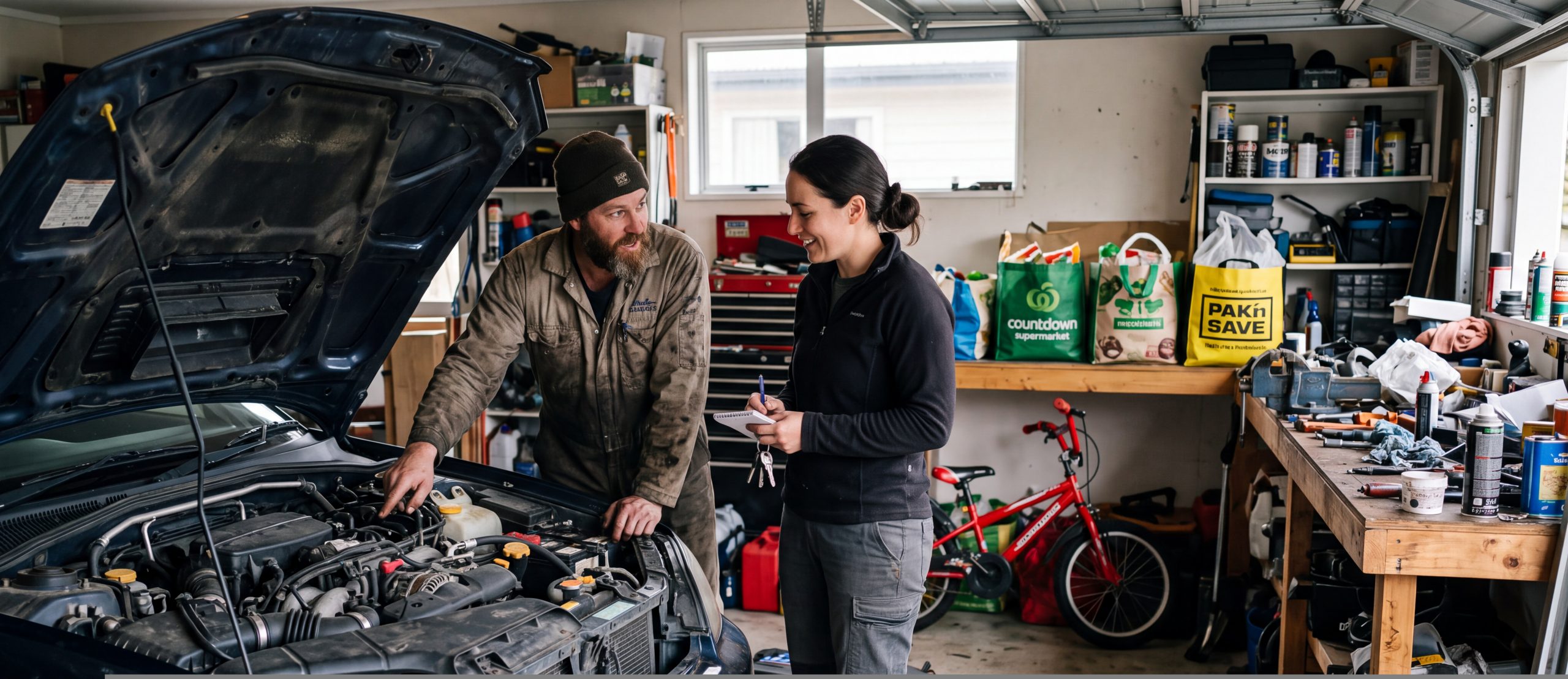
Car repair financing can assist in managing the cost of necessary repairs, but the right choice involves more than just the weekly repayment. Consider the total amount repayable, the expected lifespan of the vehicle, and whether the repair will restore reliable transport or merely postpone a larger issue.
A personal loan may be appropriate for a one-off repair as it can be independent of the vehicle’s purchase. Dealer finance is typically intended for purchasing a vehicle rather than funding repairs. Before applying, review the loan’s interest, fees, term, security arrangements, and repayment schedule, ensuring that the repayments fit comfortably within your budget.
Nectar offers a digital-first application process along with practical guidance relevant to New Zealand. Personalised loan quotes may be available in as little as 7 minutes, depending on the information provided. Any decision should be based on the clear fees and terms presented to you, rather than speed alone.
When faced with an expensive repair, borrowers often concentrate on keeping the weekly repayment manageable. While this is important, it is only part of the decision-making process.
Consider the three-part vehicle test:
This approach helps distinguish between a sensible repair and borrowing that merely delays the need to replace an unsuitable vehicle.
For individuals living outside major centres like Auckland, Wellington, or Christchurch, a car may be essential for work, school, healthcare, and long-distance travel. Relying on public transport or rides may not be feasible. This practical value is significant, but it should be weighed against the total cost of borrowing and ownership.
A personal loan is one potential method to finance repairs, subject to the lender’s assessment of your circumstances. It may be beneficial to compare this option with a repairer’s payment arrangement, an insurance claim, or using savings. Dealer finance is generally more applicable when purchasing a vehicle rather than repairing the one already in your possession.
| Financing situation | Usually better fit | Main trade-off |
|---|---|---|
| A necessary repair on a vehicle you expect to keep | Personal loan, if the repayments are manageable and the terms are suitable | You add a new repayment to a vehicle that may still require future maintenance |
| A repair covered by your insurance, warranty or a manufacturer programme | Claim or coverage first, after reviewing excesses and conditions | There may be exclusions, an excess, or limits on the work covered |
| A vehicle with repeated major faults or uncertain reliability | Compare repair costs with a replacement budget | Replacing the car incurs new purchase, registration, insurance, and finance costs |
| Buying a different vehicle from a dealer | Dealer finance or another suitable vehicle loan, compared on total cost | Dealer convenience may not equate to the lowest overall cost or greatest flexibility |
| A small repair that can be funded by adjusting the household budget | Saving or paying directly, where feasible | Waiting may be inconvenient, and the vehicle could deteriorate if the repair is safety-critical |
The key comparison is not merely “loan A versus loan B”. It is the cost of maintaining this vehicle versus the cost and risk of acquiring a new vehicle.
Request the repairer to distinguish essential safety work from recommended or cosmetic work. A written estimate should clarify what is being repaired, whether parts are new or used where appropriate, and whether other issues are likely to arise.
A WOF is helpful for assessing roadworthiness, but it does not provide a complete forecast of future maintenance needs. A vehicle can pass a WOF and still require tyres, brakes, suspension, cooling-system work, or scheduled servicing shortly thereafter.
Ensure that your insurance remains appropriate after the repair and that the vehicle’s registration is current. NZTA information can assist in verifying registration and vehicle details, but it cannot replace an independent mechanical inspection or a repairer’s diagnosis.
If you are contemplating replacing the car instead, factor in vehicle registration, insurance, servicing, tyres, and anticipated fuel or charging costs in your budget. The purchase price is only the initial cost of vehicle ownership.
A longer term may lower the weekly repayment but could increase the total interest and fees paid. A larger deposit can sometimes influence the decision more than a slightly lower advertised repayment because it reduces the amount borrowed from the outset. Avoid using funds needed for rent, essential bills, or a realistic maintenance buffer merely to make the initial borrowing appear smaller.
Also inquire whether the agreement includes a balloon payment. A lower regular repayment can obscure a significant amount due at the end. If the vehicle’s resale value is lower than anticipated, refinancing that balloon payment may result in paying for a car that is worth less than the remaining debt.
For an electric vehicle, the repair decision includes access to charging. Home charging may be convenient, while public networks such as ChargeNet or Tesla Superchargers can be beneficial for longer trips, depending on vehicle compatibility, location, and availability.
A repair that restores an older electric vehicle may still be reasonable if its battery condition and range meet your driving needs. Conversely, replacing it with a different vehicle could alter your charging routine, insurance costs, and long-distance planning. Consider the entire ownership pattern rather than assuming a lower running cost in isolation.
The same principle applies to petrol and hybrid vehicles: fuel consumption, servicing, parts availability, and the distance to a suitable repairer can be more significant in smaller towns than a headline purchase price.
Borrowing is not automatically the best response to a repair bill. Waiting or reducing the budget may be more prudent when:
If the repair impacts braking, steering, tyres, or another safety-critical system, do not postpone necessary work solely to avoid a financial decision. Instead, consult the repairer about the safest immediate option and carefully evaluate your borrowing choices.
The application process typically involves providing information about your identity, income, regular expenses, existing commitments, and the purpose of the borrowing. You may also need supporting documents, depending on the application and information available.
A lender assesses whether the proposed loan is suitable and affordable based on the information provided. Before accepting an offer, read the agreement thoroughly, including the interest rate, credit fees, total amount payable, repayment dates, early repayment terms, and any security or balloon payment.
With Nectar, the process is digital-first, with clear fees and terms presented for consideration. A personalised quote may be available in as little as 7 minutes, depending on the information provided. A quote does not guarantee approval or serve as a substitute for reviewing the agreement.
Start a personal loan application
A personal loan or Nectar may not be the best choice if you can afford the repair without straining essential household spending, if an insurer or warranty should cover the work, or if the vehicle is unlikely to remain reliable after the repair.
It may also be unsuitable if the repayments would require you to incur additional debt for everyday expenses. In such cases, consider discussing timing with the repairer, checking available coverage, reducing the repair or replacement budget, or seeking independent financial guidance before borrowing.
Nectar’s role is to provide an option for comparison, not to determine whether borrowing is appropriate for every situation. Compare similar options, understand the total cost, and choose only a repayment that remains manageable if fuel, insurance, or household costs increase.
A personal loan for repairs may offer:
It may also entail:
A personal loan may be appropriate for a repair, subject to the lender’s criteria, affordability assessment, and the terms provided. Verify whether the loan purpose is acceptable before applying.
Dealer finance is generally linked to purchasing a vehicle. For an existing car repair, compare a personal loan with insurance, warranty coverage, repairer arrangements, and using available funds.
Use the weekly repayment to assess affordability, but also compare the total amount payable, fees, loan term, and any final lump sum. A low weekly figure can result in higher overall costs or conceal a balloon payment.
No. A WOF checks specific safety and legal requirements at the time of inspection. It does not guarantee that the vehicle will avoid future repairs or maintenance.
Compare the annual interest rate, credit fees, total amount payable, repayment frequency, term, early repayment conditions, and any security or balloon payment. Ensure the outcome remains manageable alongside insurance, vehicle registration, and everyday running costs.
Car repair financing can be a practical tool when the repair is necessary, the vehicle remains suitable for its purpose, and the repayments are manageable. The best decision typically balances current cash flow with future ownership risks.
Begin with the repair diagnosis, assess the vehicle’s full running costs, and then compare borrowing options based on total cost—not just the figure next to the weekly repayment.
* Nectar Money offers competitive unsecured personal loan rates with fixed interest rates from 7.95% to 29.95% p.a., based on your credit profile. A $240 establishment fee and $1.75 administration fee per repayment apply. Strong Credit borrowers may qualify for low, competitive rates from 7.95% to 11.95% p.a.; Good Credit borrowers may qualify for rates from 14.95% to 22.95% p.a.; and Fair or Developing Credit borrowers may qualify for rates from 24.95% to 29.95% p.a. The broad range helps Nectar offer low interest rates to borrowers with excellent credit, while also providing loan options for more New Zealanders, including borrowers with fair or developing credit profiles. Learn more here.
All loans are subject to responsible lending checks and standard borrowing criteria. Please see our privacy policy and rates and terms, or visit our FAQs for the most up to date information. This publication is provided for general information purposes only and does not constitute legal, tax, financial, or other professional advice from Nectar Money. It is not intended as a substitute for obtaining advice from a financial adviser or any other qualified professional. We make no representations, warranties, or guarantees, whether express or implied, that the content in this publication is accurate, complete, or up to date.