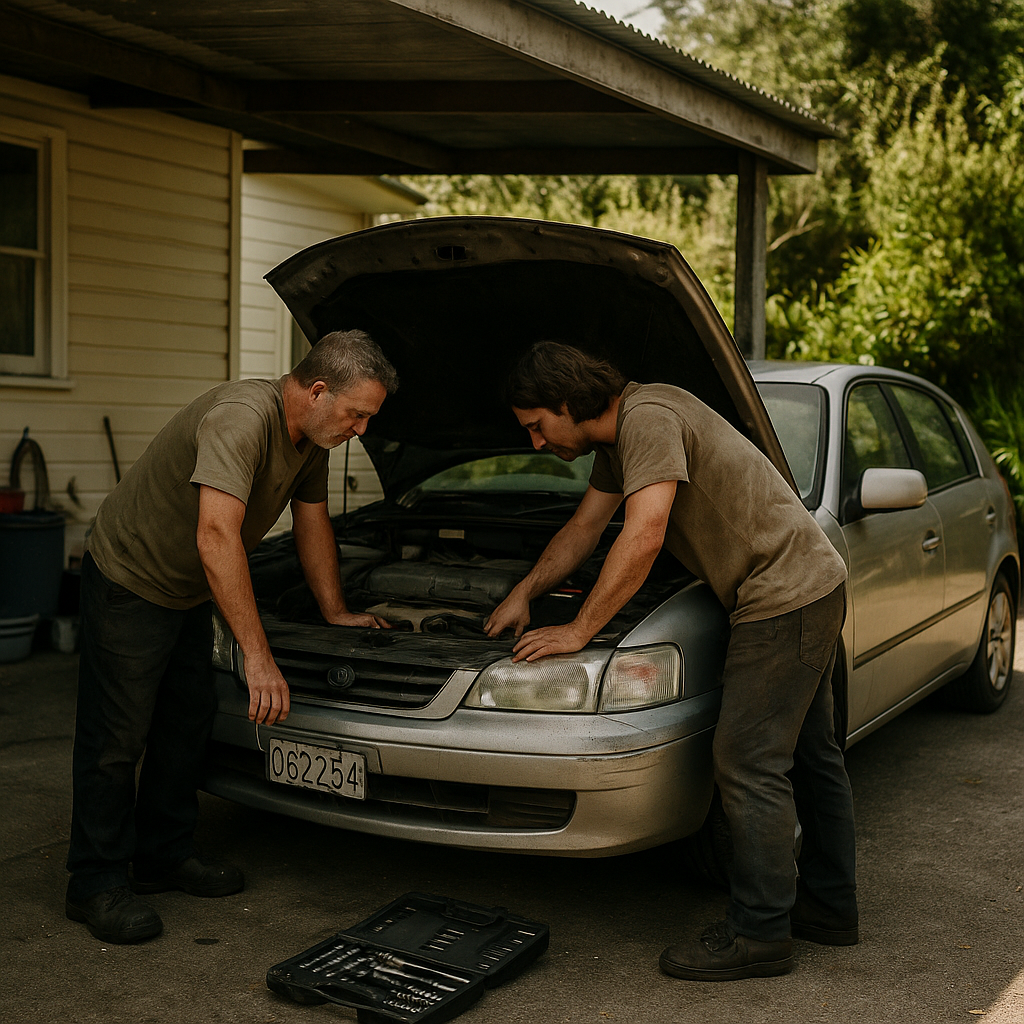
Kiwis across the country face a recurring question when their vehicle needs a pricey repair: patch up and power on, or bite the bullet and replace the car? Outside central Auckland and Wellington, your car is often non-negotiable—essential for work, family, and daily life. But with every WOF and big repair, the stakes change.
A personal loan for repairs gives you control: you pick your mechanic, stay with a familiar vehicle, and avoid forced trade-ins or tying finance to a single asset. Unlike most dealer finance deals, a personal loan is usually unsecured, so you don’t risk sudden balloon repayments, forced insurance packages, or awkward trade-ins if you want to sell or upgrade privately.
Dealer finance highlights low weekly repayments but often requires a hefty deposit, may demand you balloon part of the cost for later, and wraps the finance into the car itself. That can mean less flexibility if you want to change vehicles early, or if market values shift.
What matters most: add up the _true two-year cost_. Repairs + loan + WOF + rego + expected running costs, versus upgrading (including deposit, starter rego, fresh insurance policy, and possible interest on extra fees). The most useful mental model is to treat your car as a tool—does this fix buy you X years or WOF cycles of reliable use, or are you spending good money after bad?
Nectar tip: Always focus on total cost and practical reliability, not just the next weekly payment or a shiny ad headline. Repairs are only worth it if they sort the root problem and buy you real extra value.
It’s not just about the finance offer. Here are real-world NZ factors that often swing the equation in one direction or the other:
If you replace your car, expect double-up costs: new rego, fresh insurance premiums (which can jump, especially for newer or imported cars), mechanical checks, and—pow!—delivery fees or dealer charges.
WOF and rego cycles can also overlap awkwardly, meaning you might pay twice in one season if you’re not careful. Always check what’s due soon on your current car.
Many dealer loans keep weekly repayments low via balloon payments—a high-sum due at the end, which can sting if the car’s value drops or your plans change. Refinancing a balloon often costs more, not less, and can leave you short if future resale values slip (as can happen if models change or an EV battery warranty runs out). A bigger deposit, on the other hand, can cut all-in cost more than a slightly lower repayment rate, so savings play a bigger role than many shoppers realise.
If you live outside a major centre, factor in:
Add a margin for the risk of being off-road while waiting for repairs or delivery—not all costs are financial.
If your vehicle’s value is dropping fast, or major repairs are likely to scare off future buyers, a big repair loan can box you in. If you upgrade, factor in the real resale outlook for both your old and candidate new car—market tides can shift quickly, especially for tech-heavy or imported models.
| Situation | Usually better fit | Why or trade-off |
|---|---|---|
| Major repair under value of car, clear history | Personal loan | Known vehicle, control over mechanic, no forced trade-in, easy budgeting |
| Multiple big repairs looming, uncertain lifespan | Replace with finance | Reliability boost, avoids piling costs, but upfront deposit/insurance up |
| Saved large deposit, seeking upgrade | Dealer finance | Can lower rate/cost, but balloon and rebound value risk persists |
| Balloon payment soon, car value dropping | Personal loan | Refinance to avoid lump sum crunch, more control on term |
| Neither fits budget right now | Wait or downgrade | Avoid over-committing, enable future market flexibility |
A practical example: a regional NZ tradie with an older diesel ute faces a sudden timing belt failure. The mechanic quotes a significant amount, but assures the engine and chassis are otherwise solid, with recent WOFs clean. Upgrading to a new ute is a serious stretch—dealer finance means a big upfront deposit, balloon payment risk at the end, and notably higher insurance (especially for a late-model diesel or EV). Their region has limited ChargeNet coverage, meaning an EV upgrade adds range anxiety and charging constraints to the mix.
The borrower’s priority is reliable work transport. They compare:
After mapping costs, downtime, and insurance, they use the Nectar calculator to gauge repayments—and choose the personal loan to fix the ute, keeping side money for future upgrades but buying two more years’ practical use.
Ongoing market shifts (such as upgrades in hybrid/EV tech or surprise import rule changes) can make the final value of a balloon-financed car less than anticipated. Being forced to refinance or upgrade early can kill any weekly repayment advantage.
A larger deposit on a new car can cut your risk and lower your total cost far more than slight differences in weekly repayments or headline rates—saving up before a big switch keeps options open later.
Outside major cities, limited part availability or workshop pressure can mean longer delays. Factor backup transport or downtime into your decision—especially if your job doesn’t allow for missed days.
There are clear times a personal loan (or a replacement loan) isn’t the best fit:
If a vehicle’s faults keep coming, every extra repair is a roll of the dice. Avoid spending twice—on a patch-up now, then a forced replacement later on.
Nectar offers New Zealand drivers practical, transparent personal loan options to help bridge the gap between urgent car repairs and planned upgrades. With a digital-first process, you can check personalised loan quotes—often in as little as 7 minutes if you have your info handy (quotes require document and responsible lending checks before approval or funding). You get a clear picture of all fees, terms, and timelines so you can make the decision at home—not under pressure in a dealership or garage.
Check out rates and terms, run quick scenarios with the easy online calculator, or look at car-specific loan options if an upgrade makes more sense. All information is geared for real NZ borrowers who want control, clear comparisons, and no nasty surprises.
Ready to see your options? Compare your options with Nectar and get confident in your car finance decision.
When the repair is well under your car’s replacement cost, and there’s a strong likelihood of 1-2 more years’ reliable running. You keep the asset separate from finance, avoid deposits and balloon risks, and often accelerate the process with digital quotes.
Look out for hefty upfront deposits, higher insurance premiums, balloon payments at the end of some dealer loans, rego and WOF resets, and potential delivery or setup fees. EV buyers should factor in home charging installs and the local public charging network.
Yes. If you choose dealer finance with a balloon structure, you may have to refinance or pay a large final sum—risk is higher if the car’s resale value is below expectation, particularly in tech-shifting markets.
No. Nectar’s personalised loan quotes use a soft credit check, which is generally treated for comparison purposes and not the same as a full application enquiry. If you apply to numerous lenders in a short period, check your bureau report is up to date.
Probably not. Frequent or escalating WOF failures signal underlying problems, and putting more money into an unreliable car is usually a false economy. It’s often safer to consider replacement or step down to a simpler vehicle to avoid doubled costs.
Check your full costs, review all trade-offs, and take control of the decision. Check your rate with Nectar and see clear, fast options for your next step in car finance.
* Nectar Money offers competitive unsecured personal loan rates with fixed interest rates from 7.95% to 29.95% p.a., based on your credit profile. A $240 establishment fee and $1.75 administration fee per repayment apply. Strong Credit borrowers may qualify for low, competitive rates from 7.95% to 11.95% p.a.; Good Credit borrowers may qualify for rates from 14.95% to 22.95% p.a.; and Fair or Developing Credit borrowers may qualify for rates from 24.95% to 29.95% p.a. The broad range helps Nectar offer low interest rates to borrowers with excellent credit, while also providing loan options for more New Zealanders, including borrowers with fair or developing credit profiles. Learn more here.
All loans are subject to responsible lending checks and standard borrowing criteria. Please see our privacy policy and rates and terms, or visit our FAQs for the most up to date information. This publication is provided for general information purposes only and does not constitute legal, tax, financial, or other professional advice from Nectar Money. It is not intended as a substitute for obtaining advice from a financial adviser or any other qualified professional. We make no representations, warranties, or guarantees, whether express or implied, that the content in this publication is accurate, complete, or up to date.

