When Does a Personal Loan Make Sense for Home Charging with Your EV Purchase in NZ?
Quick answer
A personal loan for home EV charging often makes sense when you want flexibility over both vehicle and charger costs, rather than being tied to dealer finance or a secured car loan.
Dealer finance bundles may offer convenience but can lock you into higher total costs, restrictive lending, or balloon payments.
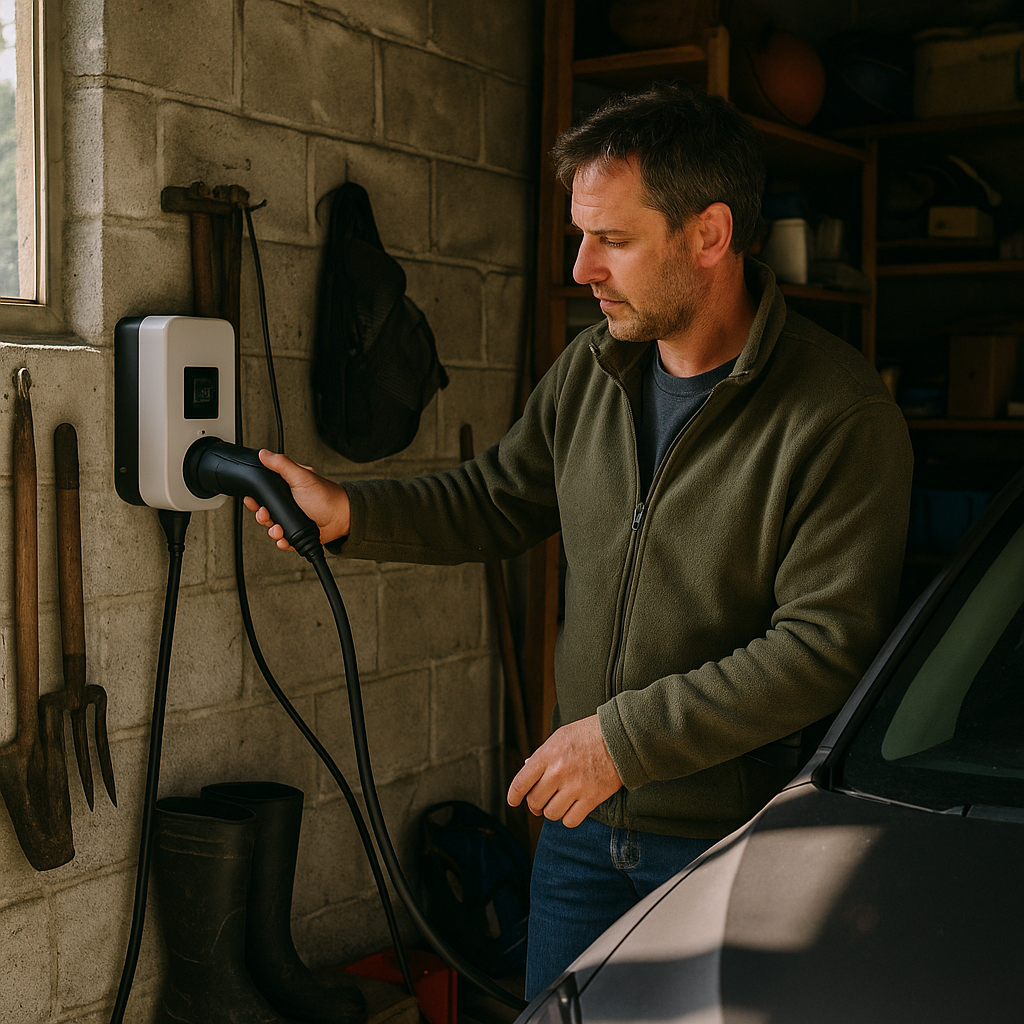
In rural or suburban NZ, having reliable home charging is a practical necessity—especially with limited ChargeNet or Tesla Supercharger access.
Check the all-in cost: repayments, total debt, insurance, WOF, registration, and installation costs for home charging, not just the sticker price or weekly payment.
If you can increase your deposit, it could reduce costs more than chasing the lowest possible repayment; be wary of deferring costs with balloon payments.
The decision in plain English
Buying an EV in New Zealand has practical differences from owning a traditional petrol car, especially outside bigger centres. A core choice many face: should you use a personal loan to cover the cost of home charging—sometimes alongside the vehicle itself—or just roll everything into a dealer finance package?
The answer depends on how you balance cashflow, total cost, security (secured vs unsecured), and practical needs. If you want to keep your vehicle loan separate from your charger, or if you’re buying your EV privately or from overseas, a personal loan puts you in charge. That means you can sort the charging solution you want, rather than what a dealership (or their finance partner) will approve or bundle.
Key factors include:
Registration: Home charging upgrades often aren’t covered by car finance, especially for used imports or private sales. Personal loans can fill this gap.
Weekly repayment focus: Dealer finance often promotes low weekly repayments but may hide high total cost or balloon/refinance risks.
Car practicality: Without home charging, EV ownership gets much less practical if you commute regionally or up-country—public charging isn’t everywhere.
What changes the total cost
What you pay in total depends on several factors beyond just the headline interest rate:
How much deposit you put down: A higher deposit cuts back the size of your loan and your long-term costs.
Repayment period: Shorter loan terms usually mean higher weekly repayments, but a lower overall cost.
Fees: Establishment fees, account keeping charges, and early repayment penalties can all add up—check the fee summary before signing anything.
Insurance: Lenders often require full insurance for car loans. Personal loans used for home charger installation don’t.
Balloon payments: Some dealer finance options have a large lump sum at the end. This can make repayments look safer than they are—refinancing later isn’t guaranteed or risk-free.
Ownership and resale risk: Hard to predict resale value for EVs (with battery aging and new tech) means a personal loan—without a balloon—could be lower risk overall.
Registration and WOF: Cars must meet NZTA standards and be registered and WOF’d before you can drive; you may need extra funds if buying privately or importing.
Balloon payments can seem attractive for short-term cashflow, but they hand you refinancing risk right when EV values are uncertain. Always weigh the risk of having to refinance, trade-in, or find a lump sum at the end.
Comparison table
Situation
Usually better fit
Why or trade-off
Buying from a dealer, want everything bundled
Dealer finance
Convenience, pre-approved, but often higher total cost and less flexibility
Buying used/private, need tailored funding
Personal loan
Covers car and charger, flexibility for setup costs, not restricted to dealer suppliers
Tightest weekly repayment needed
Dealer finance with balloon payment
Low weekly cost, but end-of-term risk and higher interest over time
Want to control all costs and repay early
Personal loan
Easier to make lump-sum payments, no balloon or secured restrictions
Already have car, only need charger
Personal loan
Only borrow what’s needed for setup, no extra security required
A realistic New Zealand scenario
A regional commuter, living just outside a major centre, buys a used EV privately. The car price blows the budget a little, and public charging is 15 minutes away via ChargeNet. The buyer weighs two pathways:
Dealer finance (not available, private sale): Would have forced them to use the dealership’s charger install partner or pay extra for flexibility. Not an option for this sale.
Personal loan: Applied for a digital personal loan, covers both charger install (quotes from a local sparky, not limited to a dealer’s preferred supplier) and additional rego/WOF work to get on the road. Pays higher interest than a secured car loan, but with no balloon payment risk and full control over ownership. Easily compares repayment periods, with a digital quote in about 7 minutes (based on information entered), before choosing the final amount to borrow.
Result: Got the charger at home, keeps the commute cost manageable, and can review or top-up the loan if battery/tech upgrades make sense later.
When another option may be better
A personal loan—whether via Nectar or another lender—won’t suit every borrower or situation, especially if:
You can put together a bigger upfront deposit to reduce car finance exposure and just use cash for charging equipment.
Your employer offers home-charging benefits or interest-free advances, which can be cheaper than even competitive personal loans.
You qualify for deeply discounted dealer packages (sometimes with buyback guarantees), but only if you’re comfortable with the terms and balloon/refinancing conditions.
Sometimes the best answer is to wait or buy a lower-cost used EV, redirecting savings to charging infrastructure. Chasing the latest model or the biggest battery isn’t always practical—especially if it means pushing the budget or adding high-interest unsecured borrowing on top.
Practical checklist
Check if the car finance will cover home charging (most dealer finance doesn’t for private/used sales).
Calculate all-in costs: car price, home charger, install, rego, insurance, future WOFs, and weekly repayments.
Compare personal loan quotes to dealer/car finance offers, with and without balloon payments.
Review repayment periods, fees, and flexibility for early repayment or lump-sum reduction.
Assess public charging reliability: is there a ChargeNet, Tesla Supercharger, or other network within daily range?
Think about future-proofing: if EV resale values change quickly, how much risk are you taking with a balloon or long-term loan?
Consider if you can adjust your deposit to shift the decision sharply in your favour.
Double-check loan approval timelines—digital options like Nectar may provide personalised loan quotes in as little as 7 minutes, which lets you compare before committing.
For private/used sales, confirm you have all documents: sale agreement, NZTA rego transfer, proof of address, and WOF.
Ask about early repayment penalties or account-keeping fees before signing.
Where Nectar can help
Nectar offers a digital-first process for New Zealanders looking for flexible car or personal loans. Whether you’re borrowing to cover only the home charger or to support the total cost of buying and running an EV, the process is transparent and built for practical NZ needs. Personalised loan quotes may be available in as little as 7 minutes, depending on the information provided, giving you quick insight into repayments and total costs before making a decision.
You can compare your options digitally, check clear fees and terms, and, once approved, choose a repayment schedule that suits your budget and risk tolerance. For more, visit Nectar’s personal loans or car loans.
FAQ
Can I use a personal loan to cover both an EV and home charging?
Yes—a personal loan is flexible and can cover the car, charger, installation, or a mix. This is especially handy for private sales or if dealer finance won’t cover all costs.
Are there risks with balloon payments?
Yes. Balloon payments can make weekly repayments look low but leave you with a big lump sum at the end, which you must pay, refinance, or trade-in. This can be risky for EVs, where resale is unpredictable.
Does getting a loan quote affect my credit history?
Soft quotes (like Nectar’s online tool) are generally used for comparison and are not treated like a formal application, but only formal applications will be reported in the same way by credit bureaus.
What about early repayment?
Personal loans often give you more control to pay ahead, but always check for early repayment fees or limits, and factor them into your decision.
Is a personal loan better than dealer finance in all situations?
Not always. Dealer finance can suit some buyers—especially with new cars, large deposits, or trade-ins—so compare both total cost and flexibility. The best option depends on your repayment comfort, risk, and vehicle plans.
* Nectar Money offers competitive unsecured personal loan rates with fixed interest rates from 7.95% to 29.95% p.a., based on your credit profile. A $240 establishment fee and $1.75 administration fee per repayment apply. Strong Credit borrowers may qualify for low, competitive rates from 7.95% to 11.95% p.a.; Good Credit borrowers may qualify for rates from 14.95% to 22.95% p.a.; and Fair or Developing Credit borrowers may qualify for rates from 24.95% to 29.95% p.a. The broad range helps Nectar offer low interest rates to borrowers with excellent credit, while also providing loan options for more New Zealanders, including borrowers with fair or developing credit profiles. Learn more here.
All loans are subject to responsible lending checks and standard borrowing criteria. Please see our privacy policy and rates and terms, or visit our FAQs for the most up to date information. This publication is provided for general information purposes only and does not constitute legal, tax, financial, or other professional advice from Nectar Money. It is not intended as a substitute for obtaining advice from a financial adviser or any other qualified professional. We make no representations, warranties, or guarantees, whether express or implied, that the content in this publication is accurate, complete, or up to date.