Repair or Replace? How NZ Borrowers Should Compare Car Finance Options When Weighing Repair Costs Against Replacement
Quick answer
Always compare the true total cost of repair (including future risk) versus replacement, factoring in NZ-specific car ownership costs like registration, WOF, insurance, and regional transport realities.
A personal loan is typically more flexible—especially for private purchases or when you want transparent terms and control over vehicle choice. Dealer finance can be faster at point-of-sale, but sometimes hides more overall cost through fees or balloon payments.
Focus on the whole-of-life cost and not just weekly repayments; longer terms or hidden balloon payments can make a deal look cheaper but cost you more.
Outside NZ’s major centres, the risk of being without a car is higher, so weigh practical uptime, access to repairs or charging, and the cost of temporary alternatives if your car fails.
Choosing to wait or stepping down your budget is often a smarter strategy than stretching for a flash new car or committing to high repayments.
The decision in plain English
When your car’s repair bill starts to look like a down payment on a new set of wheels, it’s crunch time: do you pour more cash into fixing the old ride, or finance a replacement? For NZ borrowers—especially those outside big city transport networks—this decision isn’t just about how much each option costs this month. It’s a question of reliability, practical access, total financial exposure, and future-proofing your mobility.
The most common trade-off? Personal loans vs. dealer finance. Both can fund a replacement but come with real-world pros, cons, and catches. Dealer finance often touts low weekly repayments, but these can be paired with balloon payments (big lump sums at the end) or stricter vehicle choices. Meanwhile, a personal loan—especially from a digital lender like Nectar—lets you control your budget, compare cars, and buy privately or at auction, with terms usually set out clearly from the start.
Ownership in New Zealand comes with our own twists: registration via NZTA, six- or twelve-month WOF cycles for older vehicles, and insurance costs that can leap with a higher-value car or drop if you buy newer and safer. If you’re considering an EV, access to charging networks like ChargeNet or Tesla Superchargers—and the price of insurance and battery repairs—need to be part of the budget.
What changes the total cost
Multiple factors make the real cost of ownership and borrowing different for every Kiwi:
Deposit power: The size of your upfront deposit impacts both total interest and weekly repayments. Adding even a modest extra amount can dramatically improve your loan terms, open up more choices, and avoid the risk of ending the term with hefty balloon payments or negative equity.
Repayment structure: Don’t be lulled by low weekly payments. Longer terms or balloon payments can increase your total cost. Personal loans are typically fixed and transparent, so what you see up front is what you pay.
Dealer finance catches: Dealer-arranged loans can bundle in extras, fees, and balloon payments, or limit your car choice to what’s on the forecourt—sometimes at a higher total cost especially after all charges are counted.
Cost of repairs vs. replacement: Repairing a car means betting on its future reliability, as hidden issues or imported parts can lead to repeat trips to the mechanic, especially in regional areas with fewer workshops. Replacing older cars often means higher new insurance/registration costs, but reduces your risk of unexpected downtime.
Ownership-driven costs: New vehicle, higher insurance; older vehicle, potential for surprise mechanical bills. Electric vehicles can be cheaper to run but may cost more up front and require reliable access to charging (which in NZ can vary a lot by location).
Key decision frame: Focus on your total cost to own, not just repayments. Compare repair uncertainty, risk of major breakdown, and future value against the certainty of fixed payments, predictable maintenance, and regional transport realities. If you rely on your car daily, the cost of being without it—or saddling future-you with a balloon payment—matters just as much as saving a few dollars each week now.
Comparison table
Situation
Usually better fit
Why or trade-off
Large repair cost for an aging car
Replace with loan/finance
Improved reliability; less risk of repeated repair bills, higher upfront/ongoing costs
Repair cost is modest, car is reliable and valued
Repair and keep
Cheaper now; avoids insurance, WOF, or registration hikes
Want to buy from a dealership with upgrades/warranty
Dealer finance
Smoother process, but possible balloon payment, higher total cost
Prefer control or buying via private/auction
Personal loan
Can negotiate price; clearer terms; not tied to one dealer’s stock
Need lowest weekly repayment due to cashflow
Dealer finance (balloon)
Lower payments, but major sum due at end or risk of costly refinancing
High regional/rural dependency on vehicle
More reliable car
Downtime can impact job/lifestyle/schooling; reliability trumps short-term savings
Considering EV but local charging is poor
Wait or reduce budget
Charging access, resale uncertainty, and insurance can outweigh hyped savings
A realistic New Zealand scenario
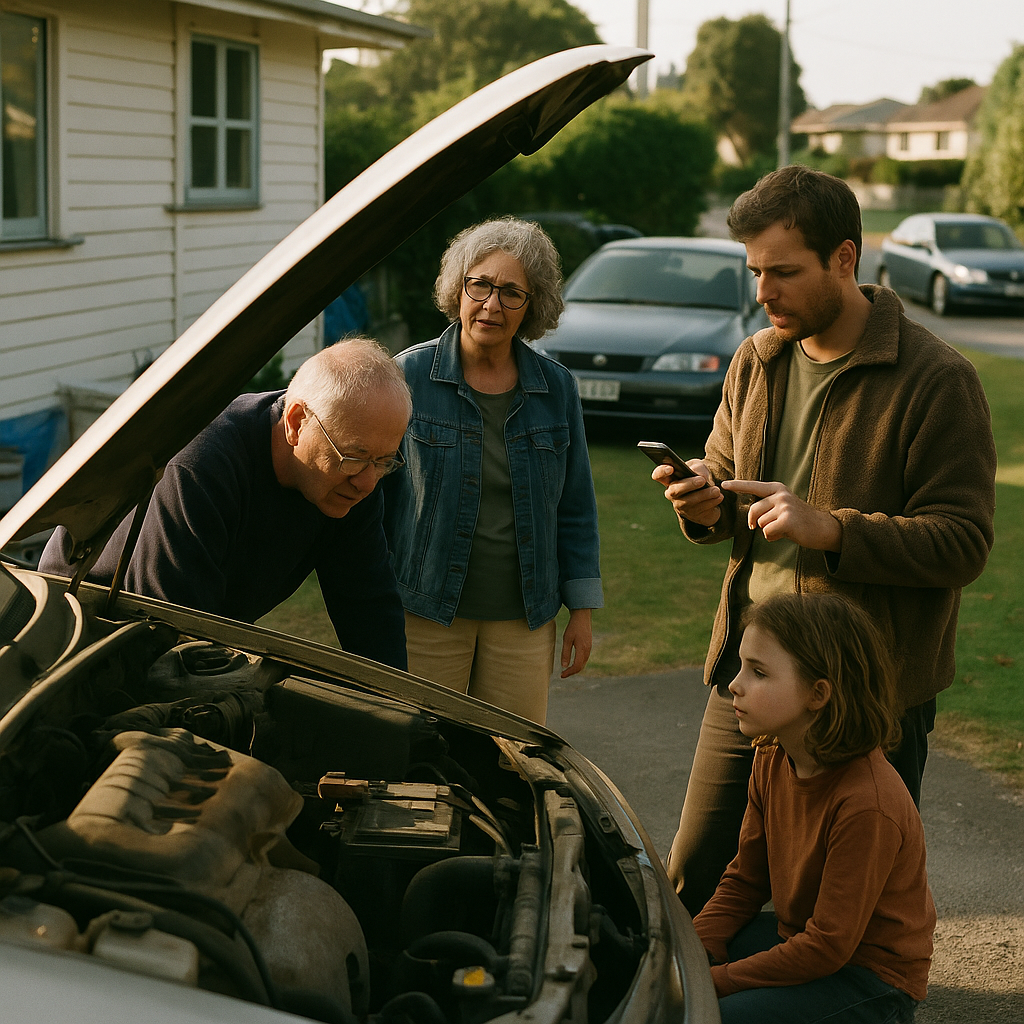
A family living just outside Palmerston North faces a choice: their 10-year-old hatchback has developed a mechanical fault and the local garage’s estimate comes close to the car’s market value. Public transport options are limited and unreliable, making car ownership crucial for work commuting, school drop-offs, and weekend family commitments.
They walk the options:
Repair: Upfront outlay is less than replacing, but risk lingers—the mechanic warns that imported parts may take weeks if further issues arise. There’s no warranty on future repairs, and downtime means costly rideshare or taxi bills if it goes wrong again.
Dealer finance: The local franchise offers an enticing weekly payment on a late-model replacement, but a balloon payment at the end (several years off) would force another borrowing or a hasty resale—plus higher insurance premiums for a newer, pricier car.
Personal loan: Applying online via Nectar gets a personalised quote in as little as 7 minutes (dependant on supplied info). They could buy a car privately, compare models, and pick a more basic petrol car that’s proven reliable regionally. They avoid balloon risks, know their terms up front, and can shop around for the best insurance. Repayments are fixed—they budget clearly, and all fees are transparent.
Working through the numbers in a loan calculator, they see that a slightly larger deposit makes more difference to repayments and total outlay than haggling over the lowest weekly payment with the dealer. That shifts their choice: they hold off on a newer EV due to limited fast chargers in their suburb and opt for a well-maintained used car instead. It’s a decision that factors in both the family’s budget and NZ’s practical ownership realities.
When another option may be better
Not all roads lead to borrowing. Consider these alternatives in context:
Repair makes sense when: The required fix is minor, and your car has a strong history of reliability. NZTA’s latest WOF didn’t highlight looming major issues, and insurance isn’t about to rise significantly.
Delaying the upgrade: If you can go a few months car-lite or temporarily manage with rideshare, a friend’s spare vehicle, or work-from-home options, every week you rock a larger deposit can drop your interest and give more negotiating power. This also buys you time to watch for market changes or new models.
Budget step-down: If repayments on a replacement would stretch your finances thin, hunting for a less fancy car—older model, less prestige, petrol over EV—can mean lower insurance, easier maintenance, and less balloon-payment stress. It also reduces total borrowing needed.
Not locked in: Major urban upgrades (like new buses or trains) may be coming soon—if your reliance on a car might drop, don’t overcommit now. Likewise, if you expect to move region or change jobs in the near future, flexibility may beat any immediate saving.
Specific risks that matter in NZ
Balloon payment risk: A standout in dealer finance. A lower weekly payment looks attractive but leaves a large lump sum at the term’s end. That’s fine if you’re confident you’ll have saved enough, but risky if you may be forced to refinance at unpredictable rates.
Resale risk: Used car values can change quickly in NZ, especially with shifts toward electrification or petrol bans. A car that seems like a good deal now could lose value quickly or become harder to sell if charging access or demand changes.
Insurance and charging for EVs: EVs often boast lower running costs but come with higher insurance, unique maintenance issues, and the need for reliable public (or home) charging. If your local area lacks ChargeNet or Tesla Superchargers, running an EV could be harder than advertised.
Deposit over weekly savings: A slightly bigger deposit can do more for your budget and borrowing power than finding a weekly payment that’s a few dollars lower. That extra buffer can unlock better offers, lower your interest, and help you sidestep balloon payment arrangements in the first place.
Practical checklist
Gather full quotes for all recommended repairs, including detailed parts/labour and a mechanic’s view on hidden risks.
Add up the estimated total cost for both repairing and replacing—don’t forget insurance, registration via NZTA, upcoming WOF, and expected running costs.
Check the structure of any dealer finance (look for balloon payments, fees, and early-repayment conditions). Ask directly about the total repayable amount.
Use a loan calculator (like Nectar’s) to compare not just weekly repayments, but interest and fees over your preferred term.
Assess your deposit. Would waiting a month or two to increase it shift your options?
Consider your region. Are you at higher risk of being immobilised if repairs take longer due to rural mechanics or imported parts delays?
Research charging access and public networks if you’re considering an EV—check local ChargeNet locations or Tesla Superchargers.
Compare insurance quotes for both your current and potential new vehicle. Don’t assume newer is always pricier; safety features can sometimes lower premiums.
Factor in possible resale—might your chosen car drop fast in value or be tricky to offload if your plans change?
Prioritise reliability and uptime if your job or family depends on a vehicle, over stretching for something newer or fancier than your budget comfortably allows.
Where Nectar can help
Nectar’s digital-first process is designed for busy NZ borrowers looking for clarity and speed—personalised loan quotes may be available in as little as 7 minutes (depending on the information you provide), with all fees and repayments transparent before you commit. This makes it easier to:
Shop beyond dealers—buy from private sellers, auctions, or negotiate free from sales pressure with a set budget.
Use clear digital tools to weigh real costs—Nectar’s repayment calculator helps you model how different deposits, terms, or budgets affect both payments and total cost.
Avoid hidden balloon surprises. Personal loan repayments are predictable, with no final ‘gotcha’ sum.
Check eligibility, prepare documents, and get localised support—Kiwi-owned, based on practical NZ borrowing realities, not just generic policy.
What’s the risk of a balloon payment?
A balloon payment is a large lump sum at the end of a finance term. If you can’t pay it from savings, you may need to refinance (possibly at higher rates) or sell the car unexpectedly—often the biggest surprise cost in dealer finance.
Can a personal loan be used to buy from a private seller in NZ?
Yes—most personal loans, including from Nectar, can be used with private sellers or at auction, not just through registered dealers. This increases your vehicle choice and negotiating power.
Are EVs a smart replacement option for regional Kiwis?
It depends. Running costs can be lower, but insurance, charging infrastructure (ChargeNet and Tesla Superchargers), and future battery repairs can add complexity. In rural areas, check local charging before choosing an EV.
How much does a deposit affect the loan deal?
A bigger deposit often means lower repayments and total cost. Even a small increase in your deposit can open better terms, shorten the loan, and help you avoid resorting to balloon payment options.
When is it better to wait or reduce my purchase budget?
If repayments strain your budget, prices are softening, or your transport needs may soon change, waiting or scaling down gives you more financial control and reduces future borrowing stress.
Next step
If you’re deciding between repairing your car or financing a replacement, start with a true total-cost comparison that covers everything from hidden repair risks to long-term finance and ownership expenses. Make use of online tools, check deposit and repayment scenarios, and weigh the practical upsides and risks unique to your region.
Take the first step toward a practical choice for your situation: Check your rate and compare vehicle finance options with Nectar today. Real information up front helps you act with confidence—Nectar’s digital loans are made for New Zealand conditions and drivers.
* Nectar Money offers competitive unsecured personal loan rates with fixed interest rates from 7.95% to 29.95% p.a., based on your credit profile. A $240 establishment fee and $1.75 administration fee per repayment apply. Strong Credit borrowers may qualify for low, competitive rates from 7.95% to 11.95% p.a.; Good Credit borrowers may qualify for rates from 14.95% to 22.95% p.a.; and Fair or Developing Credit borrowers may qualify for rates from 24.95% to 29.95% p.a. The broad range helps Nectar offer low interest rates to borrowers with excellent credit, while also providing loan options for more New Zealanders, including borrowers with fair or developing credit profiles. Learn more here.
All loans are subject to responsible lending checks and standard borrowing criteria. Please see our privacy policy and rates and terms, or visit our FAQs for the most up to date information. This publication is provided for general information purposes only and does not constitute legal, tax, financial, or other professional advice from Nectar Money. It is not intended as a substitute for obtaining advice from a financial adviser or any other qualified professional. We make no representations, warranties, or guarantees, whether express or implied, that the content in this publication is accurate, complete, or up to date.